Striking A Balance

When you work from home either as a solopreneur or because of a negotiated agreement with your work, it can sometimes feel like you’re caught in a twilight world – not quite office-based professional, but not quite ready to sit around in your pyjamas all day. This feeling can become even more exaggerated when you have extra duties to take care of, such as taking kids to school, or the child minder and you always have one eye on the clock.

How can you make working from home feel normal and retain a degree of professionalism? We take a look at some top tips to get home and remote workers in the right frame of mind.

Accept Reality

You might really want to do and achieve everything, but the truth is that’s going to be easier said than done and there are times when something has to give. If you feel like you’re constantly failing to live up to your own or other’s expectations, then it’s time to rethink those expectations. If you have a limited number of hours in your working day, then you will have to accept that there is only so much you can do. Once you accept this, you’ll find it far easier to prioritise a time sensitive such as organising your digital printing from RCSDigitalPrinting.com over replying to an email that can wait until tomorrow.

And it’s creating priorities which is at the heart of working from home. This can be made easier with a solid routine in place, avoiding that feeling of panic when you walk back through the door after the school run and wondering how your day is going to unfold.

Be Even More Organised

Home workers need to be even more organised than their office-based counterparts. With no one there to remind you, those phone conferences can be easily forgotten. And because you are away from colleagues, there are likely to be even more of them. Whether you live for the smell of new stationery or love an app that syncs all your calendars, make sure you keep up to date with tasks.

Remember You

You are more than just a worker and parent, you are still you and there are times when you need to make your mental and physical health top priority. You won’t function properly as either a worker or a parent if you’re not feeling great, so make sure you put yourself first every now and again. Take a break from the screen and go for a walk, hand over the baby and go for a run, just whatever it takes to restore a little equilibrium in your life.

There are so many advantages for home-based working but some key concepts that need to be put into place before you find yourself lost in a sea of emails and deadlines. Choose priorities that make your life easier and place your well being at the top of the agenda for a work life balance that doesn’t neglect either side.

Image: ernestoslava

Entrepreneurship In The Twenty First Century

If you’re a millennial, the chances are that you don’t remember the accounting books and filing cabinets of ye olden days. This was a time when scientific calculators and ‘doing the books’ literally meant opening your accounts book, working out your sums and writing down your tax obligations. Nowadays, things have shifted dramatically. Technology has enabled businesses in all industries and of any shape or size to become more efficient, more profitable and more successful. To make your startup a viable money making venture, you need to compete with your rivals using the technology available to you. Take a look to see if your business is fit for the twenty first century.

Finances

While you might still keep the hard copies of your receipts and you have a ring binder full of invoices, you don’t need to become bogged down in paper. While this might serve as giving you peace of mind should the cloud one day disappear, you needn’t worry. Even the government is welcoming the twenty first century with open arms with its Making Tax Digital scheme. This means that by April 2019 every single entrepreneur, freelancer, and small business will need to send its updates to HMRC digitally. This makes your business more efficient, it helps record keeping remain streamlined and it’s also good for the environment. Accounting software ranges from the basic and free software to the lucratively expensive advanced pieces of kit. Find one that suits your venture and stick with it.

Analysing Data

With the range of free online analytical pieces of software now available, you are able to monitor your website from anywhere in the world. Google Analytics allows you to track a multitude of useful pieces of data relevant to your site’s traffic and visitors. At the click of a mouse, you are able to see the most popular pages on your website, the country where most traffic is coming from, what is referring this traffic and the sorts of search terms that your visitors are using. This helps you reinforce and adapt your search engine optimisation strategy accordingly. If certain search terms are being used, you can replicate these keywords on more pages and start to embed them into your social media posts.

Social Media

The explosion of social media has been one of this century’s major advancements. Your online presence is now easier to craft than ever with Twitter, Facebook and Instagram all offering something to the entrepreneurial market. If you work in a visual sector such as graphic design or photography, Instagram could be perfect to showcase your work and attract new clients. Facebook business pages and Twitter feeds allow you to converse with your customers on a  more meaningful level and can allow you to communicate to a global audience. If you are a prolific social media user, transfer this into your business persona and seduce your potential market with your wares and services.

The twenty first century is seeing business technology developing rapidly. Ensure that you are at the forefront of this expansion.

Image: Pxhere


Why you need a system to manage your leads

Did you start your business because you wanted to do more of what you love? Maybe you love designing websites or running kids’ parties, for example. Or perhaps being able to work flexibility was your main motivator? These are typical reasons for parents starting businesses.

It’s fair to say most parent business owners are not driven by the desire to sell! Selling for most is just a part of business life, for some it’s an activity they have to grit their teeth to get through. This can be a problem, because – despite all the messages you get from small business experts about following your passion and making a difference in the world – the central activity in a business is selling. No sales, no money, no business.

It also means that many parents start businesses feeling – at best – unfamiliar with sales activities and terminology like leads, prospects, conversion and pipelines. Yet collecting and managing leads is vital if you’re going to eventually make a sale. Making sure you nurture your leads so they become prospects is the next step and keeping your pipeline full is crucial to avoid nerve-wracking periods with no sales.

So what is a lead? A lead is someone who may become a buyer at some point in the future and can be located in many different ways including your website, advertising, trade shows and many other marketing methods. Because leads can arrive in by many different routes, very small business owners sometimes find themselves responding to them as an when they arrive – an email here, a phone call there, a chat at a networking event over there.

The problem is that it’s easy to lose information like phone numbers, forget email addresses and even forget to respond in a timely way to requests. And if you don’t respond promptly they may buy from another business that does. If you have an inbox that’s driving you crazy then it may be because you don’t have an effective system for managing your leads. In fact, lead handling is so important that there are entire companies set up to do just this, such as Pronexis.

And what’s the best way to handle leads? Well, you could use an Excel spreadsheet, but there are tools designed specifically for managing leads known as customer relationship management systems (CRMs) Hubspot CRM is a good example. Some even have free plans, so it won’t cost you a penny to give them a try.

Here’s what you do. When a new lead comes your way, perhaps they found you on social media or someone mentioned your name to them, you put their contact details and a note of what they said in your CRM. The lead says they need to go away and have a think before they buy, so you then set yourself a reminder (in the CRM) to get back in touch with them if they haven’t come back to you within (say) a week. That way no information is lost and you won’t forget to contact them.

CRMs will do far more than this, for example you can enter your entire sales process and track your progress towards your sales targets if you want to. But simply setting up a CRM and using it consistently to manage leads is a huge step forward from relying on a notepad and bulging inbox!

Image: Free-photos


A Guide To Setting Up A Home Business

Now more than ever people are setting up their own home businesses and it is easy to see why. Running a home business puts you in control, and it means that you do not have the stress of commuting into work each day – this is particularly beneficial for those that live in remote areas, new parents and anyone with other large responsibilities. While it certainly has its perks, running a home business also has a few unique challenges that it is important to be aware of so that you know how to manage these. Here are a few helpful ideas if you are thinking of setting up a home business.

Separate Home & Business

One of the biggest challenges that people face no matter what type of home business they operate is being able to separate your home and business. The best approach is to have an area dedicated to business which is away from distraction and to try and keep regular office hours. Make sure that people in the house know that when you are in your office that you shouldn’t be distracted.

 Home Office

Leading on from this, you will also need to take the time to get set up with a home office that allows you to comfortably work throughout the day. This means that it needs to be a spacious room with plenty of light, you will need a comfortable office chair and ergonomic equipment. What equipment you will need will depend on what your industry is but it is always worth shopping around online to find the best deals. As an example, most businesses will need to do a fair amount of printing and you can find high-quality Epson ink cartridges for low prices online which will be much cheaper than buying in-store.

Schedule Time Out Of The House

When you run a home business, it can be very easy to get cabin fever if you do not get out of the house. It is for this reason why you should schedule time out of the house during the working day even if it is just to go for a walk or to have coffee with a client. Many people find it beneficial to take a walk at the end of the day to get out and to separate home and business (see above).

 Develop A Routine

One of the great aspects of running a home business is that it is highly flexible and you are the boss. While this has its perks, it is also a good idea to have a routine so that you can achieve what you need to each day. Additionally, you may need to tell people that just because you are at home does not mean that you are available as work must come first.

Running a home business can be highly enjoyable and there are many advantages, so it is easy to see why so many people are setting up home businesses. It can also be a unique challenge and very different from any other type of work but the above information should help you to get up and running.

Image: Life-of-pix

Has Contactless Payment Made People More Financially Irresponsible?

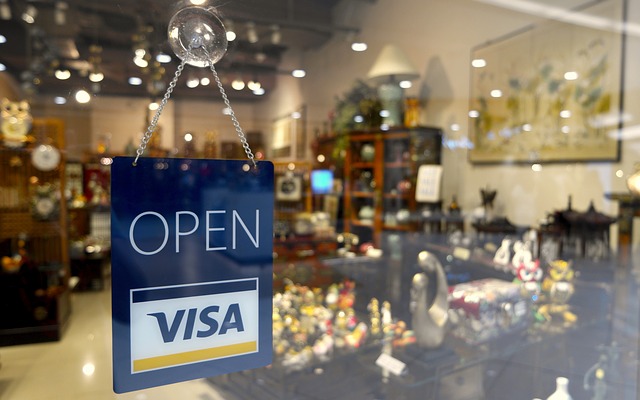
The introduction of contactless payments has revolutionised the industry. While the payments which can be made using the contactless method are currently limited, it’s predicted that in the future, they will eliminate the need for cash payments altogether.

Contactless payments are seen as a more convenient way to pay, but are they really as beneficial as you think? Or, could these types of payments be causing us to become more financially irresponsible? Below, we’ll look at the effect contactless payments are having on our finances.

Contactless payments behind rise in credit and debit payments

It’s been over a decade since contactless cards were first introduced. Initially people were wary of this new way to pay for low-cost purchases. However, in recent years it seems we’ve let go of our initial suspicions.

There’s been a huge rise in the number of people turning to contactless payments in the past few years. Not only that, but research carried out in 2017, showed that contactless payments were contributing to a rise in spending too. This is because it’s easier to make small purchases without really thinking about it when you’re just swiping or tapping a card without typing anything in. So, people are spending less with each transaction, but making more transactions than they used to.

Fuelling impulse buys

Perhaps one of the main concerns which have come from contactless payments, is that they are contributing towards more impulse buys. While you can’t buy anything large using the contactless method, that doesn’t mean the little impulse purchases you make won’t add up.

There has even been concern raised over whether or not contactless payments are making us unhealthy. The ability to pay for things such as muffins and cakes when you’re in a coffee shop, without really thinking about it has proven to be a challenge for some.

However, the rise in mobile banking has allowed people instant access to their account situation and they are able to make sure they keep on top of their finances. As some apps even send you a notification, showing you how much your latest purchase has cost you.

Making it easier to spend more than we realise

Finally, contactless payments do make it easier for us to spend more than we think. When you’re just making small payments here and there, it’s easy to forget that the totals soon mount up. For example, you could use contactless payments several times throughout the day, not adding up how much you’re spending in total.

In some cases, this can be potentially even more damaging to your finances than if you were spending on a credit card. This is especially true if you have a card which benefits from very little fees and charges.

Overall, there’s no denying that contactless payments have made our lives a little easier. However, when used incorrectly, these types of payments can actually make you much more financially irresponsible. Like any payment method, it’s important to consider your purchases before parting with your hard earned money.

Image: Multifacetedgirl

By continuing to use the site, you agree to the use of cookies. more information

The cookie settings on this website are set to "allow cookies" to give you the best browsing experience possible. If you continue to use this website without changing your cookie settings or you click "Accept" below then you are consenting to this.

Close